
Look, I get it. You are sitting there with that little WiFi icon smiling back at you, telling you that you are connected, but Chrome has not loaded. Edge won’t load. Nothing works. Your phone is humming just fine on the same network; your Windows 11 PC has drawn the short straw.
I have spent hours longer than I would like to admit grappling with this very issue, both with my own computer and with those of my family and friends, and made more than a few frantic phone calls at late hours.
And here is what I have learned: this is not a single problem; one does not get a single solution. It is typically a cocktail of problems, and the solutions you get on the majority of technology websites are hardly more than the tip of the iceberg.
Quick Answer |
|---|
WiFi connected no internet in Windows 11 is usually due to corruption of the DNS cache, old network adapter drivers (in particular, Realtek and Intel chipsets), conflicts in IP configuration, or interference of Windows updates. A quick solution is typically to run a network reset (ipconfig /flushdns, netsh winsock reset, netsh int ip reset) in Command Prompt as administrator, and then to get a new network adapter driver by visiting the manufacturer webpage—not Windows Update. |
Key Points:
- 60-70% of problems of being connected but no internet are due to DNS problems.
- The RTL8852BE and the Intel AX200 adapters are especially troublesome in Windows 11.
- Windows updates occasionally substitute operating OEM drivers with faulty generic drivers.
- The inbuilt troubleshooter usually finds the wrong diagnosis of the actual problem.
How and Why This Occurs

The thing that most articles will not tell you is the following: WiFi and internet are not the same. Once your Windows 11 PC displays the message “connected,” it means that you have connected to your router. That’s it. It does not imply that your router could be able to speak to the internet.
Just consider it in the following way: you have already made a call to the phone of your friend (wifi connection), and he is not picking up (no internet). Connection with the phone is okay, but the issue lies on the other side.
However, in a much larger majority of instances with Windows 11, it is not your router that is the problem. Hard to have a PC… being one.
The Real Culprits I’ve Found
After debugging this issue across dozens of machines, here’s what usually goes wrong.
This is what tends to go wrong after debugging this problem in dozens of machines:
- DNS cache is getting garbage: Windows keeps a memory of the recent lookups of websites, and when grabs of this get mangled (more frequently in Windows 11 than they should), your computer will be unable to convert “google.com” to an address.
- The Windows 11 has a history of drivers that it updates by installing a default version of your manufacturer’s much-tuned network driver. This is very effective, up to the point when it is not.
- IP configuration goes sideways: Your personal computer may be attempting to use an IP address conflicting with another device, or it is clinging to configuration in a different network.
- The Winsock Catalog Gets Dirty: This is the networking library that windows uses. Everything falls apart when it becomes corrupted (malware, incorrectly written VPN programs).
My own experience (Or How I Learned Not to trust windows update)
I want to tell you of the time this made me crazier than thieves.
It was a Tuesday morning. I had only recently (last night) applied a standard Windows 11 update, the type that only lasts 20 minutes and claims to be improving security and fixing bugs. I got up, took my coffee, opened my laptop and nothing. WiFi icon showed connected. The status of the network indicated that everything was okay. However, I was not able to open any webpage.
My first thought? The router is most likely to be having a moment. So I checked my phone. Perfect internet. Checked my wife’s laptop. Perfect internet. Checked our smart TV. You have guessed it—perfect internet.
So it was just my PC. Great.

Then I used the next 45 minutes to do what all tech individuals do: I tried all the quick fixes I could. Rebooted the router (although I was aware that it was not the issue). Restarted my PC three times. Used the Windows troubleshooter, which assured me that I needed to reset the network adapter, followed up by the happy announcement of all that was well. It wasn’t.
This is what worked in the actual sense: I needed to roll back my Intel WiFi driver to a pre-update version manually and then make Windows not automatically update it once more. It was an update to Windows 11, which had replaced the Intel-optimized driver (version 22.something) with a generic Microsoft driver (version 10.something). The version of Microsoft was technically operational but not reliable.
And that experience taught me something valuable, that the built-in troubleshooter is not much use in this problem. It will inform you that the DNS is not broken when it is broken. It will reformat your adapter when your adapter is functioning fine. It is as though you are seeking the services of a magic 8-ball.
Listed below are the actual fixes, which have been used to greatest success, in descending order of effectiveness:
I will take you through the solutions I apply, with the most popular ones resolving the issue 80 percent of the time, continuing down to the nuclear ones.
The Real solutions that work (Ranked by Success rate)
I shall explain my solutions to you, beginning with those that eliminate the problem 80% of the time and dropping down to the nuclear solutions.
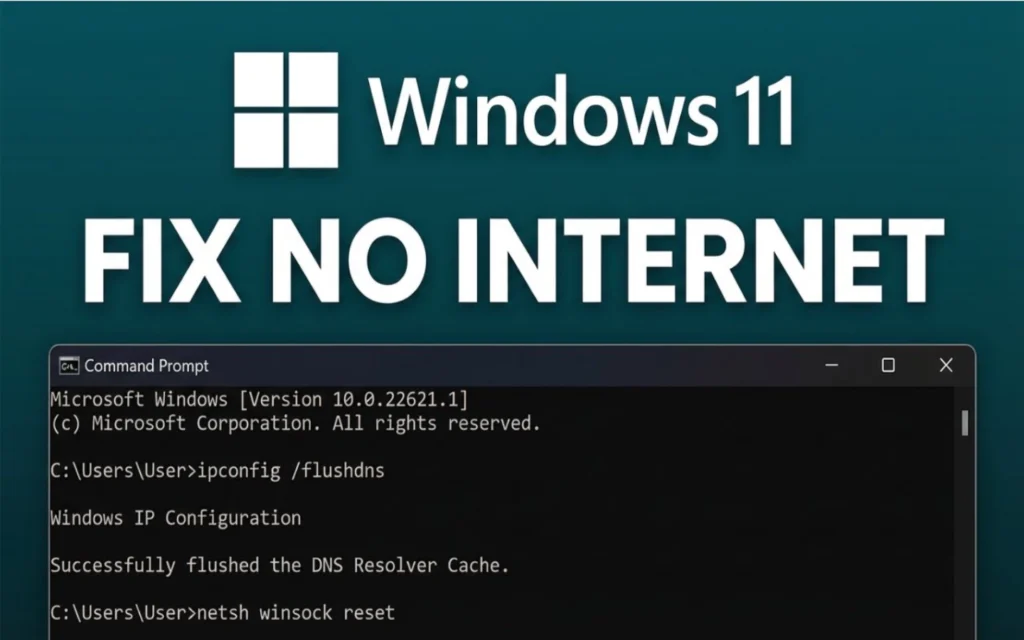
Fix 1: Flush Everything Network-Related (Success Rate: ~70%)
It is my first step and it solves the issue more frequently than other strategies.
Step-by-Step:
- In the same, click the Start button and type in the word cmd.
- Click right button Command Prompt then run as an administrator.
- Paste the following commands in order sequentially one by one and press the Enter button:
ipconfig /release ipconfig /flushdns ipconfig /renew netsh winsock reset netsh int ip reset |
4. Restart your PC
What this does: The first three commands will release your current IP and empty the DNS cache (where corrupted entries dwell) and demand a new IP. The latter two reconstruct your stack of network.
Time investment: 5 minutes
My success with this: 7/10 times, no searching is involved in this.
My lesson learned the hard way include not to omit the restart. It is irritating, I am aware, but it cannot take effect completely until a reboot. I have also spent hours in troubleshooting, and later I noticed that I had failed to restart after executing the commands.
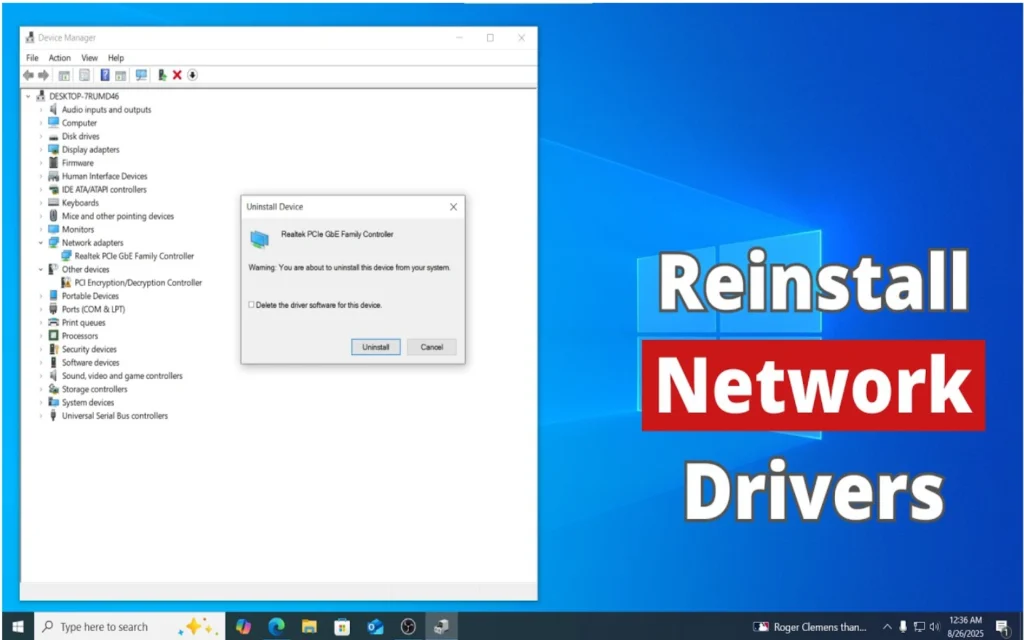
Fix 2: update your Network Adapter driver (the correct way). (Success Rate: about 60 percent).
This is where the majority of guides go wrong. They say that you should go to the Device Manager, right-click your network adapter, and click “update driver.” Don’t do that. That is just Windows Update, which is most likely the reason your driver broke in the first place.
The actually correct way:
1. First, determine what WiFi adapter you possess:
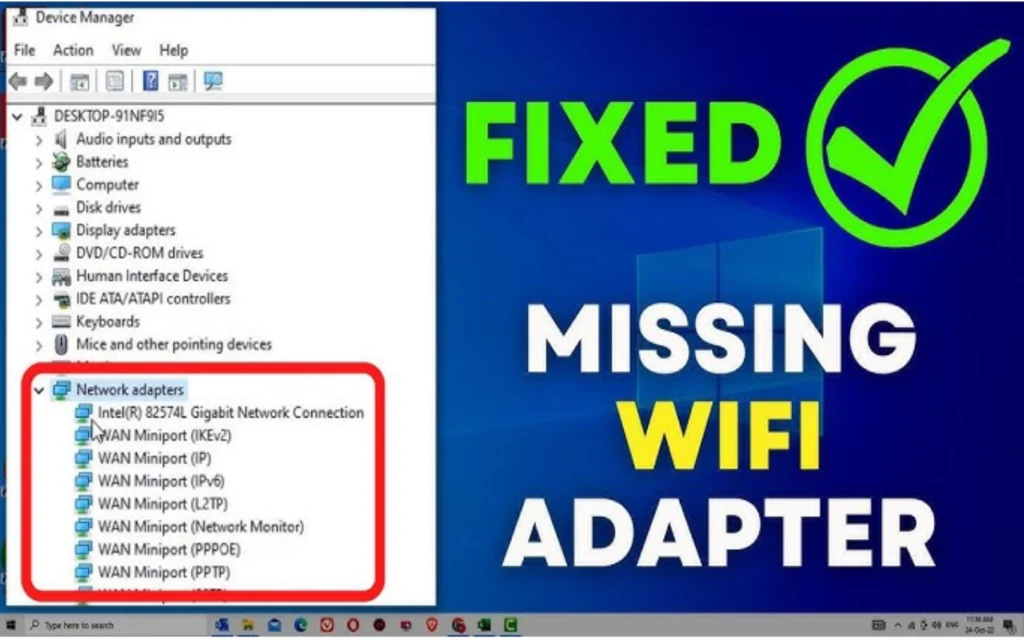
- Win + X pressed and choose the item of Device Manager.
- Expand “Network adapters.”
- Search your WiFi card (it normally indicates Intel, Realtek, Broadcom or Qualcomm)
- Click on it with the right-hand pointer and choose properties.
- Click on the Details tab and record the model.
2. Visit the manufacturer of the products:
- Intel: intel.com/content/www/us/en/download-centre/home.html
- Windows: realtek.com/en/downloads/Windows.html
- Broadcom: Through your PC company (Dell, HP, Lenovo, etc).
3. Install the most recent Windows 11 and drivers of your model.
4. Uninstall existing driver:
- Click back on Device Manager and right-click your adapter.
- Select “Uninstall device.”
- Select the option of deleting the driver software of this device.
- Click Uninstall
5. The installer that you downloaded should be run.
6. Restart your PC
What I have learned about drivers:
This is notorious in the Realtek RTL8852BE. Assuming that you possess this chip (which is present in many budget laptops and a large number of 2023-2024 models), you will most likely be facing this particular problem more than once. The quality of the driving is simply not excellent.
Intel (AX200, AX210) chips tend to be more compatible, although the Windows 11 updates tend to change the Intel driver with a Microsoft generic driver. Once that occurs, you will receive strange dropouts and no internet connection even though the connection is indicated as present.
Time to fix: 10-15 minutes
My success rate: About 6 out of 10 times this is the root cause
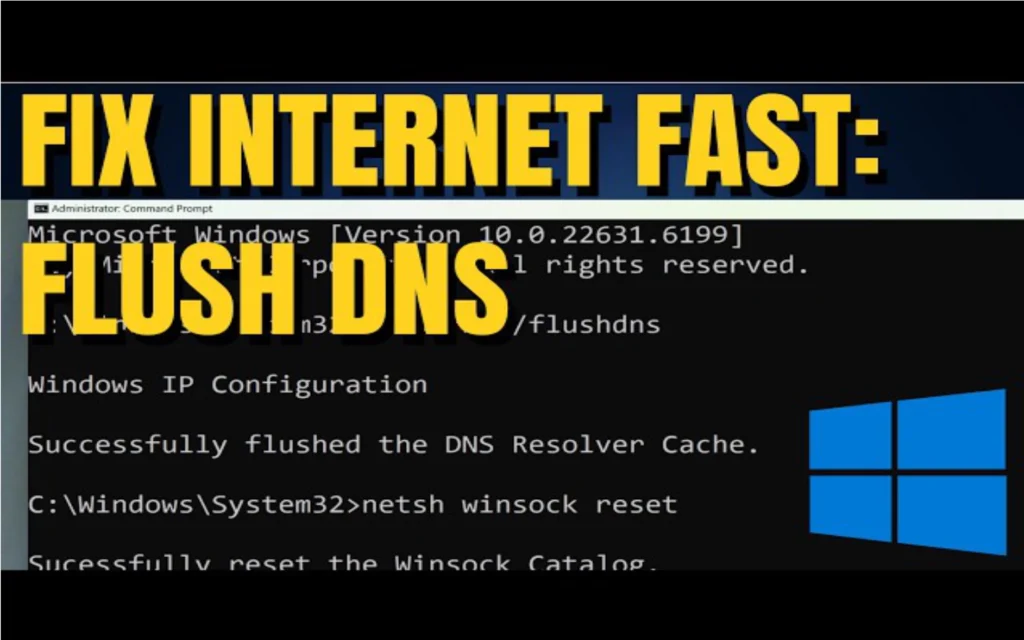
Fix 3 Switch to Public DNS( Google or Cloudflare)( Success Rate 50)
There are times when the DNS servers of your ISP are either slow, wrongly configured or having a bad day. This can be corrected by changing to a public DNS.
Here’s how:
- Press Win + I to open Settings
- Go to Network & Internet
- Click the WiFi option and then click you network name.
- Click “Hardware properties”
- Click on the DNS server assignment and scroll down and click on Edit.
- Switching on the manual instead of automatic (DHCP)
- Toggle IPv4 to On
- Enter these DNS servers:
- 8.8.8.8 (Google) or 1.1.1.1 (Cloudflare) is preferred.
- Another alternative, 8.8.4.4 (Google) or 1.0.0.1 (Cloudflare), can also be used.
9. Click Save
10. Restart your PC (yes, again)
Why this works:
To convert the name of websites to IP addresses, your PC requires DNS servers. In case your router is reporting poor DNS data or your internet service provider (ISP) DNS servers are offline, then you will be connected but with no data online.
It is this fix work I have had when everything else literally failed. The most bizarre was a Comcast connexion; their DNS servers were partially operational, and some sites loaded, some failed and the windows troubleshooter was totally baffled.
Time investment: 5 minutes
Bonus: Google dns is normally faster than the DNS provided by your ISP, so this is something to do even when it is not solving your problem at the moment.
Fix 4: Disable Fast Startup (Success Rate: ~40%)
This is one of such latent windows features that create more problems than solutions.
Fast Startup causes your computer to start quicker as it hibernates certain files in the system, rather than shutting down completely. Sounds great, right? Exception It may cause the network drivers to initialised improperly.
How to disable it:
- Press Win + R
- Click on Type and powercfg.cpl and press Enter.
- Click the left Choose what the power buttons do.
- Click Top right Change settings that are currently unavailable.
- Turn off fast start (recommended) is not checked.
- Click “Save changes”
- Restart your PC
When this is the problem:
When your internet is operational but then goes dead after a full restart but then it gets operational again once you switch-off and switch-on, then it is likely that Fast Startup is the culprit.
I have found this mostly in laptops that use Intel AX200 adapters or Realtek RTL8822CE adapters. The adapter enters the low-power state and Fast Startup fails to bring the adapter out of the low-power state.
Fix 5: Network Reset (The Nuclear Option) (Success Factor: Approx. 90%, however)
That is what I do when other things are not working. It is the best solution to the problem, but it is also the most irritating since it restores your network settings to default.
What you’ll lose:
- WiRi network information and passwords saved.
- VPN configurations
- Any custom network settings
How to do it
- Press Win + I to open Settings
- Go to Network & Internet
- Time out Vision Click next to settings.
- Go down and press Network reset.
- Click “Reset now”
- Asserted and left Windows to it.
- Restart your PC
- Rebuild association to the WiFi network.
Why this works:
It erases and restores all your network adapters and clears all your network settings and basically reinstalls all your network settings. Most issues are resolved already with just a reboot, however, in cases of a particularly recalcitrant problem (which occurs especially often after a big Windows update), this tends to resolve it.
Estimated time required: 10 minutes (embarked on system to reconfigure your networks)
The use of this should be applied when all things have been tested and you are willing to smash your laptop on the window.
Mistakes to Avoid (Personal experience)
Mistake 1: Rely on the Built-in Troubleshooter.
I have been of the opinion that Windows Network Troubleshooter was useful. Though I have resolved this issue dozens of times, I came to know that it is mostly just…there. It will perform certain diagnostics and perhaps reset a diacetylmorphine. But it frequently fails to see the real issue.
Example: There was this occasion when I had a laptop and the troubleshooter claimed that DNS is performing well and my DNS cache was totally corrupted. The solution was to run the ipconfig /flushdns command and it immediately worked.
The fix: Go pass on the troubleshooter and directly onto the command-line solutions. They are more efficient and quicker.
Mistake 2: Only Updating Drivers Through Device Manager
The update driver button of device manager just verifies windows update. Windows update is known to deliver old fashioned or generic drivers. In the case of network adapters, you must acquire drivers straight out of the company.
I lost three hours one time trying to work out a Realtek adapter problem, installing the driver using the Device Manager several times, when it became clear that Windows was simply installing the same faulty driver version every time.
The fix: It is always a good idea to download drivers by Intel, Realtek or the manufacturer of your laptop. Windows update should never be trusted with network drivers.
Mistake 3: Overlooking the IPv6 Problem.
Windows 11 loves IPv6. That may not be the case with your network equipment. When enabling IPv6 in your network, but not setting it up correctly, it may result in all sorts of strange network connectivity problems.
Quick fix to try:
- Connection to networks (Win + R and type ancpa.cpl).
- In order to access the Properties, right-click on WiFi adapter and choose Properties.
- Internet Protocol Version 6 (TCP/IPv6) is not unchecked.
- Click OK
I would say that this permanently solves the issue two out of every ten times, and when it can permanently resolve it, it continues immediately.
Mistake 4 Failure to flash back Antivirus Interference.
The antivirus programs that may hamper network connectivity are those installed as 3rd parties such as McAfee. I’ve seen this so many times.
Specifically, McAfee also has a feature of network protection which occasionally makes some legitimate network traffic to be suspicious and blocks it. You shall have an internet connected, yet no internet.
How to test this:
Switch off (temporarily not permanently) your antivirus and check whether the internet is restored. When it does, then you have your problem.
There was an instance where my friend failed to conjoin the laptop he installed McAfee. I switched it off, no problems with the internet. He has changed to Windows Defender (free and inbuilt), issue resolved forever.
Mistake 5: Not to check for IP address conflicts.
This hardly ever occurs, but once it does, it is infuriating. When two devices in your network are attempting to use the same IP address, then you are going to experience strange connectivity conditions.
How to check:
Click on Command Prompt and type ipconfig /all.
Look at your IPv4 address. It is supposed to be, in the form of, 192.168.1.xxx. When it begins with 169.254.x.x then that is an APIPA address that means your PC failed to receive a valid IP address on your router.
Fix:
ipconfig /release ipconfig /renew |
Expert Tips (The effects the Majority of Attendants AWS
Tip 1: Check Your Router’s DNS Relay Settings
If multiple devices are having the same problem, the issue might be your router’s DNS relay or DNS proxy feature. Some routers try to be “helpful” by intercepting DNS requests, but they do a terrible job of it.
Go into your router (192.168.1.1 or 192.168.0.1 or so in most cases) and locate the DNS settings and attempt to disable them, whether at the DNS relay, or DNS proxy under any available settings. The next thing to do is to set your router DNS to 8.8.8.8 8.8.4.4.
This solved a troublesome issue on my part because all Windows 11 devices across the household were fine, but Android and iOS were not.
Tip 2 Disable” Metered Connection” If It’s Accidentally Enabled
Windows 11 handles connections with meters in a different manner, and certain applications will refuse to connect when they believe that you are on the metered network.
Check this:
- Settings > Network and Internet > WiFi
- Click your network
- Insure that “ Metered connection is turned off.
I once wasted time in solving a no internet problem that took place as someone turned on this option.
Tip 3: The Power Management Trick
Windows has a fondness of switching off your network. This may make it fail to wake up.
Fix:
- Device Manager > Network adapters
- Right-click your WiFi adapter > Properties
- Go to the “Power Management” tab
- Uncheck” Allow the computer to turn off this device to save power”
This is a widespread use mostly on laptops. The adapter sleeps and windows is having a problem in waking it up.
Tip 4: Check windows upgrade problems
A certain Windows Update can sometimes result in the break up of the network extensively. Search Google: Googling the current windows 11 version network problems will help ascertain whether any other person is experiencing the same problem.
I have witnessed that KB5065789 and KB5066131 updates make significant DNS problems in the system of numerous users. When you recently reformatted an update and then you start experiencing network related issues, then chances are that that is not by chance.
Fix: Roll back the update:
- Settings-windows update- update history.
- Later scroll down and choose and click Uninstall updates.
- Identify the latest update and de-install it.
- Restart
Tip 5: The Temporary File Cache Clear
It is a queer thing but I have known it happen. Windows places temporary files that relate to the network which sometimes bring conflicts.
Try this:
- Press Win + R
- Type `%temp%` and hit Enter
- Press Ctrl + A to select all
- Press Delete (you can get an error with files used in the system, but that is fine)
- Restart your PC
Only has approximately 10% success but has 2-minutes and can even correct odd problems.
When It’s Router/ISP It Really Is (And How to Know).
In some cases, it is actually your network and not your PC. Here’s how to know for sure:
Test 1: Can other devices connect?
Assuming that your phone, tablet and other computers all run perfectly on the same network, it certainly is your PC.
Test 2: Can you ping your router?
Open Command Prompt and type:
ping 192.168.1.1 |
(Or the IP address of your router is whatever)
In case you receive replies, then your connection with the router is perfect. Either it is a DNS problem or the connection of your router to the internet.
Test 3: Is it possible to ping out IP?
Try:
ping 8.8.8.8 |
In case this is successful and websites fail to load, it is certainly a DNS issue.
When that fails, then it is either your router or your ISP.
When to call your ISP:
- All devices have the proble
- Your router indicates that they are connected to the internet and nothing is working.
- Ping to 8.8.8.8 also fails following all the above fixes.
- The issue began following one of the familiar outages in your neighbourhood.
Common Questions (That I Get Asked A Lot)
They will occasionally update your drive with a Microsoft one that is not as effective as that of your manufacturer because of windows update. It is trying to help keeping drivers updated, though in a majority of situations it makes plans of network adapters even worse.
Fix: Check the version of your network adapter driver in Device Manager after each major update. In the event of a change re-installation of OEM driver on the manufacturer site.
It is an indicator that some third-party application is hacking into your network- it is typically a VPN, firewall, or antivirus software.
Fix: Boot and enter the Safe Mode with Networking and observe what still works then boot and open the services folder and start switching them off until you have discovered the guilty party.
The windows software defines the internet status as it tries connecting to a Microsoft server. It does not always perform in case of internet working.
Try:
1. Start up again the Network List Service.
2. Run: `netsh winsock reset`
3. Restart your PC
Yes, but with caveats. WiFi 6 is quicker and more efficient, however the drivers of WiFi 6 adapters in windows 11 are also prone to bugs, particularly Realtek ones.
When you always have a problem with WiFi 6 card, the following is to be used in the Device Manager to turn off the WiFi 6:
1. Click your adapter with the fingers of the right hand side > Properties.
2. Advanced tab
3. Find “802.11ax” or “WiFi 6” and disable it
I have observed this workaround to ensure drop outs on multiple adapters based on Realtek RTL8852BE.
Sometimes, yes. But when you have made all the best of a bad Realtek chipset that is built in, and there is not a single option left that you can make, a USB adapter that costs such a small amount of money would save you a tremendous amount of headache, which can cost just a small amount of money.
This is the reason why I have a TP-Link Archer T3U USB adaptor in my tool kit. A USB adapter tends to fix certain inbuilt adapter of the person very effectively whenever it is not working.
Various routers are configured differently. It is possible that your office employs different security settings, different WiFi channels or different DNS servers.
Things to try:
i. Take a break, remember to forget the network each time you change the location and forget it.
ii. If one of the places is on the 2.4GHz-band and the other one is on the 5GHz-band.
iii. Looking at use of DNS 8.8.8.8 instead of automatic.
Typically no. Another problem is the slow WiFi connection since there is no internet connection. Excessive slow WiFi is generally occasioned by:
1. Distance from router
2. Various gadget inhibitions
3. Disturbance of other gadgets.
4. Unnecessary number of machines on the network.
5. Your ISP throttling
6. Old router firmware
However, in case you are receiving 1-2 Mbps of the expected 100+ Mbps, update the WiFi driver just in case- sometimes they can solve the problem.
After all the software repairs have been done:
1. Get WiFi adapter hardware: Check.
a. Open Device Manager
b. Search in any yellow warning signs.
c. Attempt to reseat the WiFi card (be it as that you feel comfortable opening your laptop)
2. Try a different user account:
a. Add a new account to the system.
b. Add a new local user.
c. Test the WiFi- Listen and know whether it is functioning.
d. When it does, there is a possibility of corrupted profile as a user.
3. The install of windows is clean:
a. This is the nuclear alternative, though under some circumstances, the corrupted windows system cannot be repaired.
b. Back up everything first
c. Do a clean install of Windows 11
4. Temporarily acquire USB WiFi solution.
5. Get in touch with the producer of the laptop:
a. It may be either a hardware fault; and this is an issue with your laptop that comes with a warranty.
b. They can be with an update of BIOS which corrects it.
Read more: WiFi Connected But No Internet? Best 15 Fixes That Works
Final Thought
I understand that this issue is destructively irritating. There is something peculiarly vexing about Krone’s witnessing of “Connected” and having just nothing come through. You are gaslighted by your computer.
However, in the great majority of instances, this is correctable. Attack with the DNS flush and Winsock reset. Unless that works, install your driver correctly (not through windows update) then. You may also be at a loss, so get through the other fixes.
And a word of advice: you have opted to spend over an hour on this and it has not worked yet, maybe it is time to simply spend the money and purchase a USB WiFi adapter and be done with it. You are not worth 25 cents in your sanity.
What worked for you? Should you discover a solution to this problem beyond those I described, or should you have a peculiarly nettlewick case of this, I would be glad to know about it. Any connected but no internet observation makes me aware of something new in networking peculiarities of Windows 11.
The contents of this post are purely educational. Although these fixes have been effective to me and many others, networking problems are very diverse. You may not like working with the command line, or modifying configuration of your system, in which case you may wish to seek professional assistance. Before making significant changes in the system, always make sure to save key information.