Quick Answer |
We have to find out what is happening with your Ring Chime not working. Your Ring app might be the problem with your Ring Chime not working. Maybe the Ring app has disabled the notifications. The chime that might not be associated with doorbells is your problem. It may be any wrong kind of chime that has been selectively picked. This order is capable of yielding some of the issues within less than 10 minutes. Points: i. The first place should be chime alerts. ii. You are to make sure that the WiFi signal is strong. III. You would wish to ensure that Chime is hooked up. IV. You are to be made to select the appropriate form of chime. |
Think about this: you are waiting to accept a package on a Tuesday afternoon, and you receive a notification on your phone concerning Ring. There is somebody at the door. But the Ring Chime? Silent. You rush back to the phone, drop the application, and before you even see who is calling you, the delivery man is driving off. I have been there.
When my Ring Chime not working and my phone continuing to receive notifications, I spent hours browsing forums, and making phone calls. The point that I learned is that most Ring Chime problems are not hardware problems and they are software configuration problems.
This guide will also demonstrate how the fixes the Ring Chime not working, I have worked out solutions for you so that you do not have to do much, and some insider tips that are not addressed in the official support articles of Ring. To fix this Ring Chime problem No technical ability is necessary.
The reason why your ring chime not working.
Before we start repairing things we need to know what we are working with. Your Ring Chime is a WiFi speaker in effect, which listens to a signal sent by your doorbell. When a user pushes the button, your doorbell sends a message through your WiFi network to the servers at Ring, who then send a ping to your Chime and make a sound. It is a very complex chain of something that appears so easy.
The Top offenders (In descending order of probability)
After my own experience with troubleshooting issues, coupled with reading hundreds of posts in forums, the actual causes of Ring Chime’s failures, in order of frequency, are:
Cause | Frequency | Typical Fix |
Chime Alerts turned off in app | ~40% | Toggle Chime Alerts ON in device settings |
Chime not linked to doorbell | ~25% | Link Chime to doorbell in app settings |
Weak WiFi signal (RSSI) | ~20% | Improve WiFi coverage or move devices |
Incorrect chime type selected | ~10% | Set correct chime type (Mechanical/Digital) |
Alexa integration conflict | ~4% | Disable/re-enable Ring skill in Alexa |
Hardware failure | ~1% | Contact Ring support for replacement |
Notice something important? The final on the list is the hardware failure. Fortunately enough, there is a way out of the software and connectivity problems; thus, before you would be able to decide that your Ring chime not working and that it needs replacement, cleanse the software problems. I have even witnessed how people wasted money on fixing the chime that was just a toggle switch in the application.
Quick Fixes within 5 Minutes or Less
We will begin with the fixes that do not demand any technical skills and minimal time. Try these in order, testing your chime after each one.
Fix 1: Check Your Chime Alerts Setting
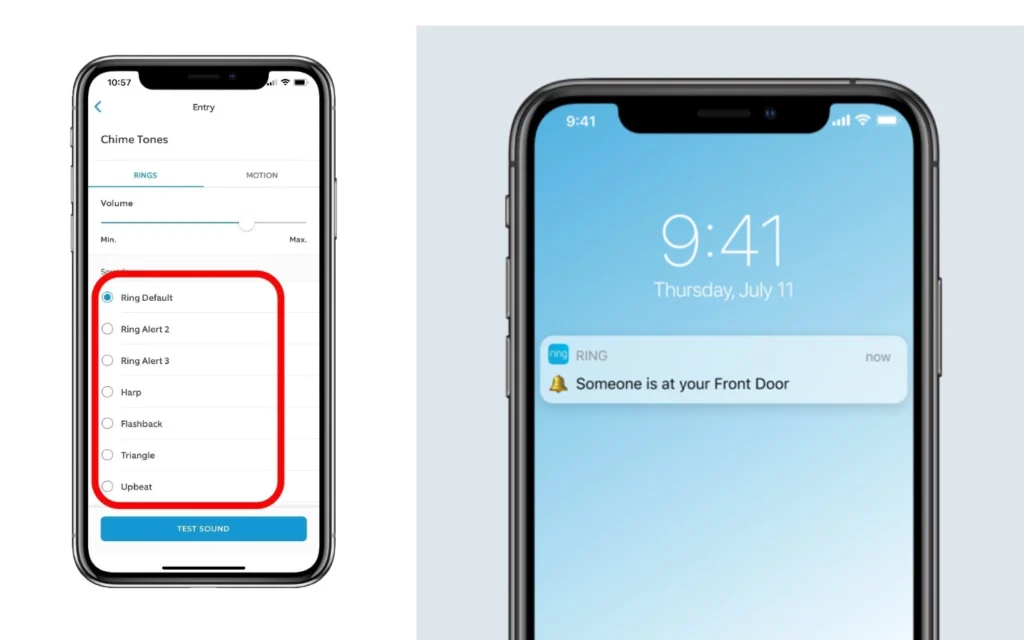
This is the scenario that has been haunting me every time, and it happens that I am not the only one. There are two volume controls on the ring, the location of which is different:
- Chime Volume: controls the volume of the chime.
- Selector: Determines the type of sound that the chime should have or not.
When you are turning off your Chime Alerts mutes, you will be listening to 100 percent and hear nothing. In order to check, follow the following steps:
- Click the Ring App, and tap the three lines (menu) in the upper left.
- Tap Devices
- Choose your Chime (it is not your doorbell, it is your Chime).
- Tap Chime Alerts
- Ensure that Doorbell Press has been turned on.
Time required: 2 minutes. My experience rate of the success: 40 percent.
Fix 2: Verify Your Chime Is Linked to Your Doorbell
It is among the ones that surprise me. Your Chime and doorbell are not automated at all to communicate with no flipped connections between the two since they are also connected to the same WiFi. You have to explicitly link them in the app.
- Choice of Devices on the Ring application.
- Select your DOORBELL (this time no longer the Chime)
- Tap Device Settings
- Find Linked Chimes or Chime Settings.
- Make sure that you add and enable your Chime.
The majority of the manuals fail to indicate this: When you have changed your doorbell (or replaced it), you lose the connection to your Chime. Without such a connection being re-established, nothing will go on with it, though everything may seem to be okay. It is what has occurred to me when one of the firmware updates has cleared my settings.
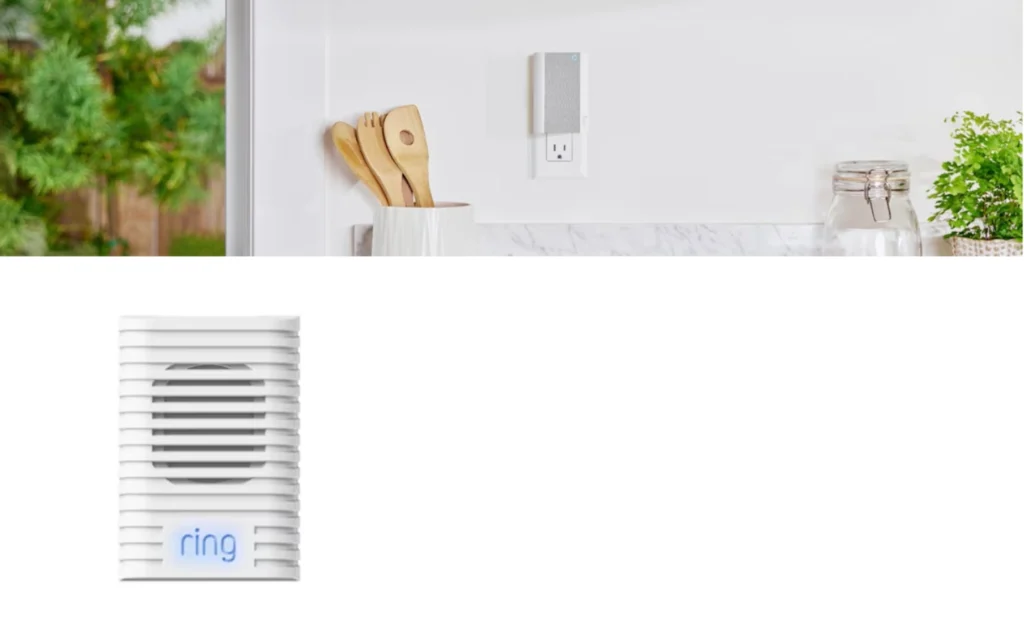
Fix 3: Check the Strength of WiFi Signal.
Your Chime requires a strong signal of WiFi to receive a signal of your doorbell. However, the thing is that you have got WiFi full signals on your phone and you cannot use Chime. Why? The phone has far better antenna compared to Chime.
In order to verify the Chime signal strength:
- Choose Devices in the Ring application.
- Select your chime.
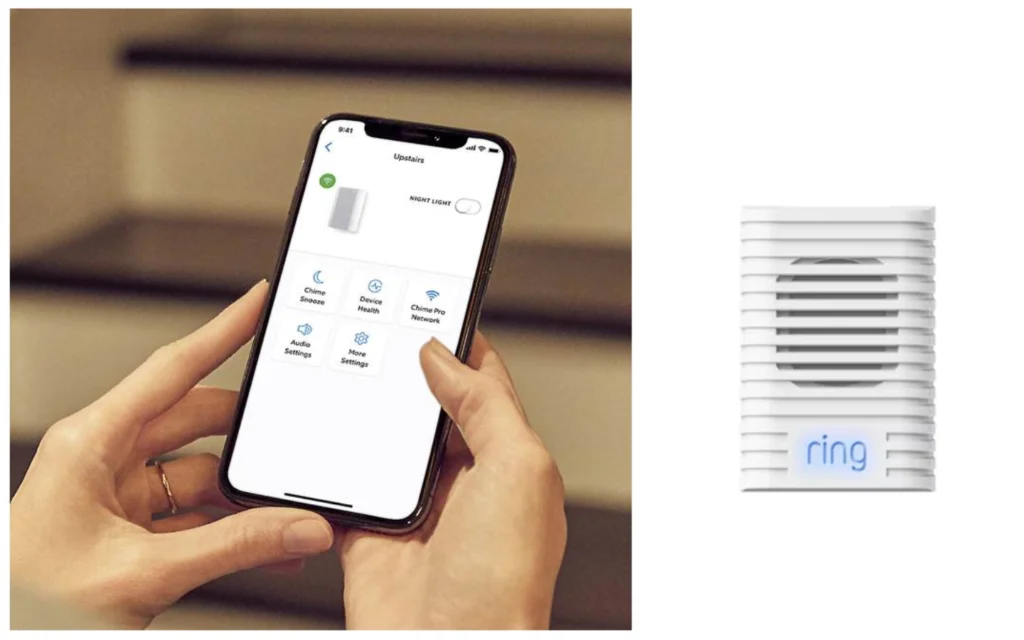
- Tap Device Health
Search the value of RSSI.
The RSSI (Received Signal Strength Indicator) has its value, which is negative. The implications of the same are as follows:
RSSI Range | Signal Quality | What It Means |
-40 to -50 | Excellent | Strong signal, no issues expected |
-51 to -60 | Good | Should work reliably |
-61 to -7 | Fair | May have intermittent issues |
Below -70 | Poor | Likely to cause problems |
Once your RSSI is below -60 then chances are that your Chime is experiencing drops of connection every now and then. This brings about the feared works sometimes issue that is extremely aggravating to identify.
The Hidden Settings that No One is discussing.
At this point we are approaching the contents that consumed hours of my time on forums to uncover. These settings are not as hidden as such, but they are deep enough such that they are not highlighted by the majority of troubleshooting guides.
The Chime Type Setting (Critical for Hardwired Doorbells)
When a person has Ring doorbell and is hardwired to his/her mechanical or digital chime, it has a setting, which tells his/her doorbell how to communicate with the chime. Miss this and you have partial rings, or buzz sound, or nothing at all.
The following are the ways of how to locate it:
- To access it, one should simply go to Open Ring app > Devices > Your Doorbell.
- Tap Device Settings
- Set Tap In-Home Chime.
- Search on Chime Type.
There are three options, which are:
- Mechanical: The olden days dong-dong use of physical bells.
- Digital: Electronic, plays chimes which record sounds.
- None: There is no internal chime (you are only using Ring Chime or Alexa)
The tricky part? Other Ring doorbells, a few of them specifically the Video Doorbell Wired and some of the Pro models, do not have in-home chimes at all. When you possess one of those, and you are endeavoring to have your old mechanical chime to work, it will never come in spite of all the adjustments you may make. The indoor alerts require a Ring Chime or an Alexa.
The Motion vs Ring Distinction
Your Ring Chime will notify you of two things, each time somebody pushes the doorbell button, and when someone is detected to move. They are also regulable independently and the default settings are not necessarily as they should be.
Under the settings of your Chime, there will be the toggle options of:
i. Each of these can be configured to emit sounds on pressing a doorbell button.
ii. Motion Alerts: (Sounds when motion occurs)
In case you have no other interests than doorbell presses only, make sure Ring Alerts is active, and Motion Alerts is not. Otherwise you will hear bells each time some car passes or a squirrel runs across your doorstep. Ask me how I know.
WiFi Issues That Kill Your Chime
The killer of the Ring Chime capability is the WiFi issues. Your Chime may seem to be linked up in the app yet it may not ring at the opportune time. It is what I have learnt in solving the problems of chime diagnosis and fixes in WiFi related problems.
The 2.4 GHz vs the 5GHz Issue.
The majority of the Ring devices such as the standard Chime support only the 2.4GHz WiFi networks. The Chime Pro can work with both 2.4GHz and 5GHz, however, the beauty of the matter is, when even having a dual-band router, your Chime can attempt connection to the wrong band and not work.
In case your router is broadcasting two networks with the same network name (SSID) your Chime may become confused and particularly during setup. This was revealed to me when my Chime Pro would fail to go online after every several days. The solution? When configuring it, you have to select the 2.4GHz network manually in case your router isolates them, or momentarily disable the 5GHz band when configuring it.
Mesh Network Headaches
Mesh WiFi, such as Eero, Netgear Orbi, or Google Nest WiFi, is an excellent choice in the matter of coverage, yet they may cause an issue with Ring devices. Why? Since most mesh systems steer devices with band steering to make them move towards 5GHz, Ring devices do not always co-exist with this.
In case your Chime continually goes offline or does not connect to the network when setting up a mesh system, there is a workaround to this issue that I found in one of the forums:
- The first is to configure a guest network with broadcast that is limited to 2.4GHz only.
- Connect your Ring Chime to this guest network.
- When you are connected and updated, it is expected to work on your primary network.
Alternatively, there are mesh systems that allow temporarily disabling 5GHz in the application when installing them. Test the parameters of your router.
The Router Reboot Sequence That Actually Works
All the ring chime troubleshooting manuals instruct you to restart your router. However, there is a certain order that would suit Ring devices better:
- Unplug your Chime
- Disconnect your router and your modem.
- Wait 30 seconds (this is essential, and it should not be neglected)
- Install modem and wait till it is fully booted.
- Install router, boot up.
- Plug in Chime final.
The point is to make sure that all the devices are turned off and then one turns devices on in a specific sequence beginning with internet source and ending with the end device. This will be to have your Chime restored to a new IP address and clean connection.
The ‘Ding But No Dong’ Mystery Explained
This is among the most bizarre problems I had experienced, and it is actually quite widespread with reference to the discussion boards. I hear your mechanical chime, half cocked, the ding, and not the dong. What gives?
The following is the situation: under the traditional mechanical doorbells, an electrical circuit is completed when the button gets pressed. This drives a solenoid (electromagnet) to strike a hammer in hitting on the ding bell. The same way is on release of the button the circuit is broken, the solenoid is de-energized and a spring brings the hammer back to strike the supporting dong bell.
Ring doorbells are made to temporarily contact this circuit to make it ring. However, when the timing is not correct or in case your doorbell is taking the circuit too long to release, you will still hear the ding and the solenoid will never release the dong.
How to Fix the Partial Ring
- Check your Chime Type setting (see previous section)
- If it’s set to Mechanical, try switching to Digital temporarily, then back to Mechanical
- This forces the doorbell to recalibrate its trigger timing
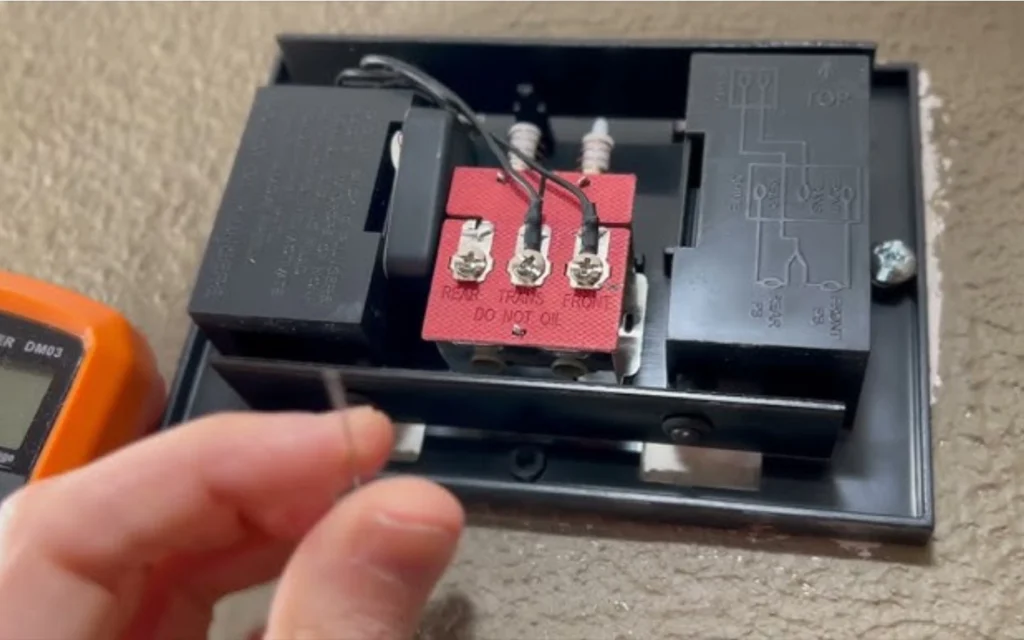
And even that does not work, there is a more advanced solution that would include the Pro Power Kit (assuming that your doorbell was supplied with the latter). The Pro Power Kit is a tiny gadget that is installed in your mechanical chime box and it assists in controlling the amount of power to your Ring doorbell. Partial rings can be produced, though, in case it is not fitted properly, or wires come in contact with the moving parts of the chime.
To check this:
- Turn off your doorbell at the breaker.
- Take the lid off your mechanic chime.
- Find the Pro Power Kit (rectangular-shaped thing, small, which has some wires).
- Make sure that wires do not come in contact with the bells or the hammers of chime.
- Check the kit to ensure that it is well attached to Front and Trans terminals.
Caution: In case of working with low-voltage wiring, a call to an electrician is needed in case you are not comfortable with this type of work. It is not that valuable to take the risk.

My Personal experience: Fixing ring chime not working
I recently had an experience with the Ring Chime not working that made me spend three hours in troubleshooting the device to find out that it was Alexa that was causing the issue. Yes, the smart assistant that Amazon has created was sabotaging my Ring Chime.
The following was the case: I was able to connect my Ring doorbell to various devices of my Alexa that would announce the arrival of a visitor. One day my Ring Chime had gone dead. I took all the troubleshooting steps that I encountered. Reviewed the application preferences. Rebooted everything. Even restore the Chime to factory. Nothing worked.
At last, out of intuition, I went to the Alexa application and turned off the Ring skill. My Chime immediately resumed its operation. I turned the skill on once again and the Chime continued. The Alexa integration somehow entered the condition where it would capture doorbell notifications and would not pass them on to the Chime.
This is the reason that every time my ring chime is not working, I always disable and enable the Ring skill in Alexa. The time required is 30 seconds and has resolved the issue thrice.
The Firmware Update That Broke Everything
The other lesson learned through harsh experience is that Ring firmware updates sometimes may corrupt your device settings. Not the settings in the application, the settings that have been saved on the actual device.
My ring chime is not working, and I had to perform one automatic update of the firmware. Whatever I did I could not be able to reconnect it. The fix? A factory reset. However, not any reset, a particular procedure:
- Press the reset button on the Chime 20 seconds (not 15, not 30, it is 20)
- Wait to have light flash rapidly.
- Take out the plug of the Chime and leave it off 10 seconds.
- Insert it again and use it as a new device.
The 20 seconds hold appears to cause a greater reset than the 15 seconds suggested in the majority of manuals. This is the time I got in one of the community forums posts on a Ring support rep and it has therefore saved me twice.
How to avoid making the same mistake (Mistakes I Made So You Don’t Have To)
I have done all the mistakes I could have committed in my five years of owning Ring in various houses. The large ones to be avoided are as follows:
Mistake 1: Buying a New Chime Before Checking Settings
I almost did this. My ring chime not working and I was willing to spend $35 in the replacement. Apparently, the Chime Alerts switch had been switched off by one of the updates. Spending two minutes of setting checking would have saved me thirty five dollars and a visit to the store.
Mistake 2: Thinking that to be connected is to be working.
Its Ring app is able to display your Chime as connected and online even when it is not receiving notifications. Connection status simply implies that the Chime can communicate with the servers of Ring, and not that it is actually connected to your doorbell. Never rely on the status of the app only, make sure to actually press your doorbell button.
Mistake 3: Leaving the RSSI Number.
My Chime was having a working life and a non-working life over several months. This ringing was sometimes and sometimes not. I criticized the servers at Ring, malfunction of software, all except the fact that my WiFi signal was poor. As soon as I shifted the position of my router a little and raised the RSSI by a few points, that is, to -52, the issue was resolved.
Mistake 4: Failure to investigate Compatibility Before Purchase.
The Ring Video Doorbell Wired will not work with mechanical chimes, and neither do some of the models that are available with Pro. Period. I also read posts on forums weekly of individuals who are attempting to have their current chime operate on these models. It is never going to happen. Not after you buy, before you buy Check Ring.
Mistake 5: The Interference with Alexa.
In case you are using Alexa devices to announce Ring notifications, you will remember that Alexa and your Ring Chime are in the same competition of getting notifications. Your Chime may miss the notification in case Alexa manages to snatch the notification and hiccup. The disable/ re-enable trick in the process of ring chime troubleshooting that I mentioned above is now included in my ring chime troubleshooting routine.
Ring-wearing Pro Tips Decades of Ring-wearing
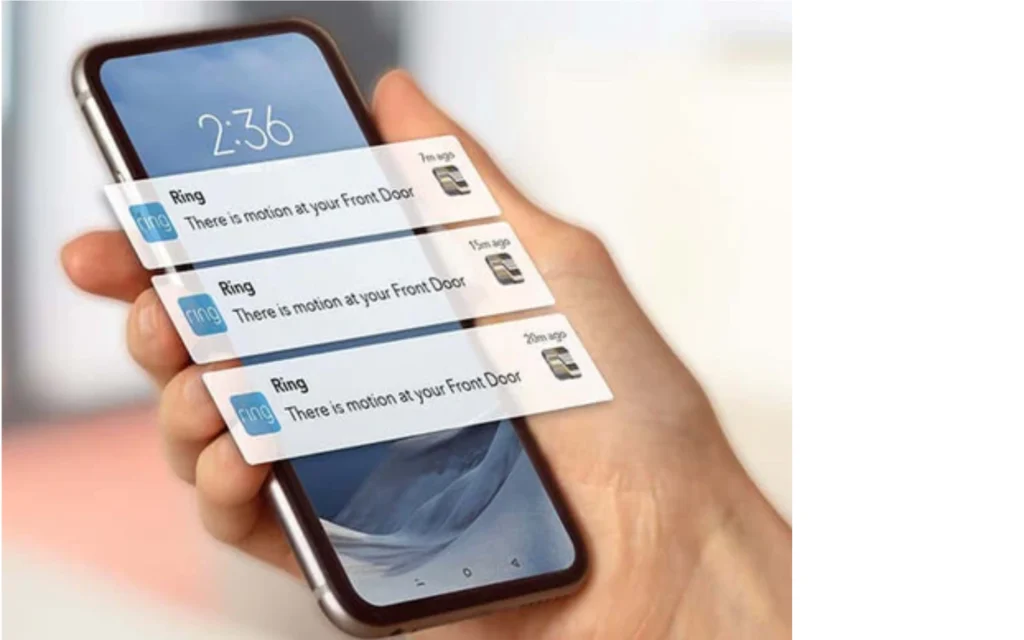
The following are the tricks and tricks that I have acquired and do not necessarily involve basic ring chime troubleshooting:
The Screwdriver Test of the Wiring Problems
A simple test that does not involve a multimeter is important in case you suspect that there is some issue with your wiring with a hardwired doorbell:
- Remove your Ring doorbell from the wall
- Touch the metal shaft of a screwdriver to both terminal screws at the same time
- This completes the circuit and should trigger your mechanical chime
In the case of the screwdriver test, which tells you that you have a doorbell, but not the doorbell button, then it is most likely that your Ring doorbell has the issue. In case it does not sound when the screwdriver is used, then there is a wiring or transformer problem.
Critical: This test should be only done in case of mechanical chime. Then don’t do it when you have gone round your chime, or when you have wired straight to a transformer.
Multiple Chimes can be used to have more coverage.
One Ring Chime may not be adequate in case of a bigger house or heavy walls. The good news? It can be expanded with various Ring Chimes and they are all compatible with the same doorbell. I have one that is upstairs and one that is down the stair and it has made a great difference.
Pro tip: The normal Chime is normally adequate to the majority of individuals. The Chime Pro should be purchased only when the WiFi extension functionality is required by other Ring devices. Nightlight is a nice product, but it is not that great of an addition that would justify the additional price.
Set Up Motion Zones to Reduce False Alerts
When you are enabled to motion alerts in your Chime, you have to consider setting up Motion Zone on your doorbell settings. This allows it to set areas where movement is to be detected to raise an alarm. I do not include the sidewalk and the street as part of my zones hence I only receive chimes of people who are coming to my door.
Schedule Quiet Hours
Did you have any idea that you can schedule events in which your Chime will not go off? The settings of Quiet Hours or Do Not Disturb are found in the Chime settings. My personal one will be to keep silent between 10 PM and 7 AM. Notifications on my phone are still being received and the house is silent.
How to Contact Ring Support (And Fast) When to Call Ring Support.
You have exhausted all means at times and you need to enlist the services of the professionals. This is when to make such a call and the maximum results are obtained:
Call Support If:
1. You have followed every step in this guide and still have no connection with Chime.
2. Your Chime is also less than a year old and you think it has a problem with its hardware.
3. You receive error codes in the application, which you are unable to fix.
4. The doorbell is functioning well, but several Chimes are not functioning (wiring problem may exist).
Before You Call:
1. Make sure that you have your Ring account email.
2. Be familiar with your model numbers of doorbell and Chime.
3. You will have to be ready to talk about what you have already done.
4. Keep the Ring application in your phone when making the call.
The support employee is also likely to request you to do what you have already done. Give them time and they must go by their script. However, after the initial phase, the high-tech customer service is rather good. I have made them recognize the problem that I would have never detected myself.
Frequently Asked Questions
A: It is practically always an issue with WiFi signal. Installed device health Check your RSSI in Chime. The worse part is that when it is below -60, then your Chime is most likely to have intermittent connection problems. Attempt to bring the router nearer, purchase a WiFi booster or replace it with a Chime Pro which has stronger antennas.
A: It is expected that there would be some delay because of the signal path (doorbell to WiFi to Ring servers to Chime). However, that is too much time of 5-10 seconds. This normally shows the poor signal of WiFi or network overloading. Monitor your RSSI and change your internet plan in case you have numerous devices that consume the internet bandwidth.
A: Not necessarily. The Alexa devices are capable of announcing the Ring doorbell presses that may be enough to meet your demands. Nevertheless, I can say that it is better to have both. The announcements of the Alexa are not reliable (I also experienced it myself), whereas the Chime is designed to perform only one task. In addition, the Chime does not have a minor lag of Amazon devices.
A: Yes, in the Ring application, you should find the settings of your Chime and you will see Chime Volume. It has an option of 1-10. In case of the irritation of 10, it is possible to add one more Chime in a different room. It also has a Do Not Disturb feature that will prevent the Chime and leave the phone notifications on.
A: This normally implies that your Ring doorbell is not transmitting a pulse to the chime but constant power. Make sure that you selected your Chime Type (Mechanical vs Digital) in the application. In case it is already turned to Mechanical, then, attempt to change it back to Digital and then again to force a recalibration.
A: No. The WiFi extender capability of the Chime Pro is not compatible with other devices other than Ring. It establishes a specialized network that your Ring gadgets can get connected to yet not other devices such as phones, laptops or smart television sets. To extend to a general WiFi, it is required to have a standard WiFi extender or a mesh system.
A: Ring Chimes are really dependable, as far as I am concerned. My personal experience with a continuous running of more than 4 years went without problems. The failure mode occurs most of the times to be WiFi connection issues, rather than the hardware failure. When you have more than one year old Chime, and it is not functioning, you should do the factory reset option before you start to think it is dead.
Conclusion: Your Time Will Come Round.
It is frustrating when the Ring Chime not working , but the positive thing is that the majority of the issues can be resolved without the need to purchase new devices. In my case, Chime Alerts are switched off, the Chime is not connected with the doorbell, or Wi-Fi signal issues are the three factors that lead to approximately 80% of the Ring Chime problems.
Begin with the quick fixes and then go through the settings and do not forget to ensure that you have Alexa integration in place in case you have used it. This can be used to isolate the problem with wiring and just knowing when you should call the support is time-saving.
In case you have found this guide useful, you should bookmark it to refer to it the next time your Chime is malfunctioning. And should you find something I miss that I have not mentioned, send me a note, I am always in need of new tricks on how to keep these machines running in a smooth manner. Have that doorbell button pressed and have a listening to a working chime. You’ve earned it.
Thank you for reading.