Skip to content

Emergency AC Repair
Picture this: It’s 95° outside, humidity is through the roof, and your air conditioner just made a sound like a dying walrus. Then — silence. No cool air. Just the oppressive heat slowly turning your home into a sauna.
Sound familiar?
When your AC goes out unexpectedly, panic sets in fast. You’re sweating, frustrated, and wondering how much this is going to cost you. Your kids are complaining. Your pets are panting. And you’re searching for “emergency AC repair near me” while questioning every life decision that led to this moment.
Take a deep breath. This guide will walk you through exactly what to do when you need emergency AC repair—from quick fixes you can try yourself to knowing when it’s time to call in the pros. By the end, you’ll know how to handle a cooling crisis like a seasoned homeowner, save money on unnecessary repairs, and prevent future breakdowns.
Let’s get your home comfortable again.
Is This Really an Emergency? How to Tell
Not every AC problem requires a midnight service call. But some situations absolutely do. Here’s how to know the difference:
Signs That Your AC Needs Emergency Repair Immediately
1 Complete system failure during extreme heat (90°F+ outside)
2 Burning smell or smoke coming from your unit
3 Loud banging, screeching, or grinding noises
4 Refrigerant leak (hissing sound, ice buildup, or oily residue)
5 Electrical issues like tripped breakers that won’t reset
6 Someone in your home is heat-sensitive (infants or those with health conditions)
7 Water flooding from your indoor unit
8 Complete power loss to your AC system with no obvious cause

Problems That Can Wait (Maybe)
I. Slightly reduced cooling efficiency
II. Minor temperature fluctuations between rooms
III. A clogged air filter you can replace yourself
IV. Programmable thermostat scheduling issues
V. Unusual but not alarming sounds (light humming, gentle whooshing)
Bottom line: If your health or safety is at risk, it’s an emergency. Don’t wait. Heat-related illness can set in quickly, especially for vulnerable family members.
Prior to requesting emergency AC repair, try these quick fixes.
Before you pick up the phone and pay those after-hours fees, run through this checklist. You might save yourself a service call—and a few hundred dollars.
1. Check Your Thermostat
I know, I know. It sounds obvious. But you’d be surprised how many “emergencies” are just:
I. Instead of “COOL,” the thermostat is set to “HEAT.”
II. Dead batteries in the thermostat
III. Someone accidentally bumped the temperature up
IV. The fan set to “ON” instead of “AUTO” (which blows warm air when the AC isn’t running)
V. A programmed schedule that’s fighting your manual settings
Quick fix: Replace the batteries, ensure it’s on COOL mode, and set it 5-10 degrees below room temperature. Give it 5-10 minutes to respond.
2. Inspect Your Circuit Breaker
Your AC unit draws a lot of power. Sometimes it trips the breaker, especially during heat waves when it’s working overtime.
1. Head to your electrical panel (usually in the basement, garage, or utility closet)
2. Look for a tripped breaker (it’ll be in the middle position, not fully ON or OFF)
3. Flip it fully OFF, then back ON
4. Check if your AC starts up
Warning: If the breaker trips again immediately, stop right there. You require expert assistance for an electrical problem. Continuing to reset it could cause a fire hazard.
3. Change Your Air Filter
A clogged filter can cause your system to freeze up or shut down entirely. It’s one of the most common—and most preventable—AC problems.
1. Turn off your AC completely
2. Locate the filter (usually near the return air duct, blower compartment, or behind a vent grille)
3. If it’s gray, clogged with dust, or you can’t see through it, replace it
4. Make sure you’re using the right size filter (check the old one for dimensions)
5. Turn the system back on and wait 30 minutes
Pro tip: Set a phone reminder to check your filter monthly during cooling season. A $15 filter change can prevent a $500 repair.
4. Clear the Area Around Your Outdoor Unit
Your condenser unit needs breathing room. When it’s choked by debris, it can’t release heat properly, causing your system to overheat and shut down.
Remove:
i. Leaves, grass clippings, and debris
ii. Overgrown vegetation within 2-3 feet
iii. Anything blocking airflow (toys, furniture, storage items)
iv. Dirt and grime on the fins
Give it a quick rinse with a garden hose (with the unit turned off!) to remove dirt from the fins. Use gentle water pressure—high pressure can bend the delicate fins.
5. Check Your Condensate Drain Line
The water that is removed from the air by your air conditioner must go somewhere. If the drain line gets clogged, your system may shut off as a safety measure.
i. Locate the drain line (usually a PVC pipe near your indoor unit)
ii. Check for standing water or algae growth
iii. If clogged, try using a wet/dry vacuum to clear it
iv. Pour a cup of white vinegar down the line to prevent future clogs
6. Reset Your System
Sometimes your AC just needs a fresh start. Turn off the thermostat, wait 5 minutes, then turn it back on. This gives the internal components time to reset and can clear minor glitches.
Still not working? Time to move to the next step.
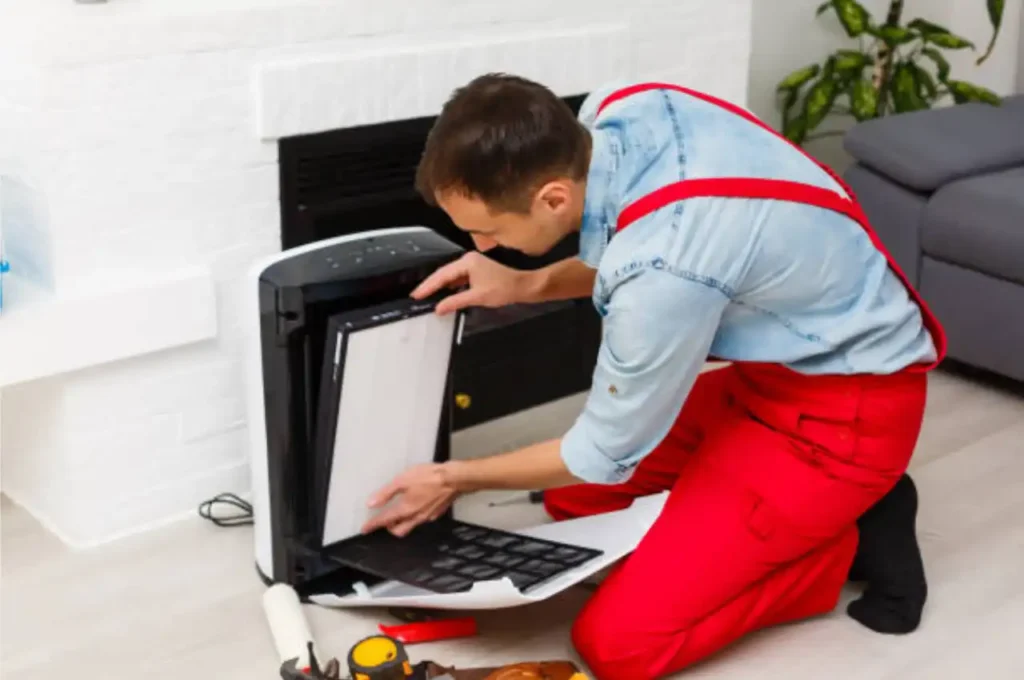
When to Make a Professional Emergency AC Repair Call
You’ve tried the basics. Your AC is still blowing warm air—or not blowing at all. Now what?
Don’t Wait to Call Dict artist is unaware of:
Strange Noises
These sounds aren’t just annoying – they’re your AC crying for help:
Screeching = possible motor bearing failure or subject for belt issues
1. Banging = parts in the compressor which are loose or broken
2. Hissing=refrigerant leak (do look for an ice build up too)
3. Clicks = electrical issue/ failing capacitor
4. Buzzing = loose parts, Refrigerator. is leaking or electrical
5. Rattling = loose panels or screws in system or debris in the system
Ice Buildup
If you notice ice on your lines of refrigerant, evaporator coil, or outdoor unit, turn off the system right away. Running it can do damage to the compressor a $2,000+ repair. Ice usually indicates:
1. Low refrigerant levels
2. Ductwork (Clogged filter, blocked vents) Poor air flow
3. Dirty evaporator coils
4. Blowing blower motor does not work
Water Leaks
Puddles around your indoor unit could be:
i. Drain line from condensing unit clogged
ii. Cracked drain pan
iii. Frozen evaporator coils which are thawing up
iv. Disconnected drain line
Left unaddressed, water damage can havoc your floors, your walls, and force the growth of mold.
Burning Smells
Racism and persecution Any electrical burning smell is a red flag. Turn off with your system with going to the breaker and call for emergency to come. This could indicate:
1. Overheating motor
2. Electrical wiring issues
3. Failing capacitor
4. Burnt insulation
Warm Air Blowing
According to the authors at My Homework sheets, if your vents are blowing warm air at your home when the thermostat is set to cool, some of the possible causes include:
1. Refrigerant leak
2. Compressor failure
3. Dirty condenser coils
4 Thermostat malfunction
5 Ductwork issues
Frequent Cycling
When an AC is turning ON and Off rapidly (short cycling), such AC could mean:
1 Oversized unit
2 Thermostat issues
3 Refrigerant problems
4. Electrical issues
5. Clogged air filter
This is a waste of energy and will be unnecessarily wearing your system out.
Expectations for an Emergency AC Repair Visit
When the technician gets to arrive, here goes what can happen usually:
The Diagnostic Process (15 Minutes – 30 minutes)
1. Interview – They’ll ask, what happened, when it started, what have you tried, unusual sounds and smells etc.
2. Dye Test – Using fluorescent or narrative dye, solution flows through an X-ray for inspection.2 Visual inspection – Checking for obvious problems, such as leaks, damages, ice build-up or debris
3. System testing – Checking refrigerant levels, testing electrical components, checking air flow and inspecting thermostat
4. Diagnosis – Giving an explanation of what went wrong, why it went wrong and what the repair options are
A good technician will be able to explain everything in clients speak, not in HVAC jargon. Don’t be afraid to ask questions
Common Emergency Repairs and Costs
| Repair Type | Typical Cost | Time to Fix | What It Does |
| Capacitor replacement | $150-$400 | 30-60 minutes | Provides the electrical jolt to start the compressor and fan |
| Contactor replacement | $150-$350 | 1-2 hours | Controls the flow of electricity to the compressor and fan motor |
| Refrigerant leak repair | $200-$1,500+ | 2-4 hours | Seals leaks and recharges the system with refrigerant |
| Compressor replacement | $1,200-$2,800 | 3-5 hours | The heart of your AC system—circulates refrigerant |
| Blower motor replacement | $400-$1,200 | 2-3 hours | Pushes cooled air through your ducts |
| Fan motor replacement | $300-$800 | 1-2 hours | Cools the condenser coils in the outdoor unit |
| Thermostat replacement | $150-$500 | 1-2 hours | Controls temperature settings and system operation |
| Condensate pump replacement | $200-$600 | 1-2 hours | Removes water from the drain pan |
Pro tip: Emergency service calls moreover come with after hours expenses ($100 – $250 extra). Ask about this in advance so that you aren’t shocked by the bill.
Questions Your Technician Should Answer
First, before you take any action to start work, you must ensure that you know:
1. What exactly is wrong?
2. What caused the problem?
3. What are my repair options?
4. How many dollars is each option going to cost?
5. Is this a temporary solution or a permanent solution?
6. How long will the repair take?
7. Do you have a Warranty on Parts and Labor?

How to Pick the Best AC Repair Service for Emergencies
Not all Hvac Companies Are Created Equal When you’re a desperate person in need of cool air, it’s easy to call the first thing you see by calling the first number you find. Resist that urge. A poor repair may cost you more in the long period of time.
Red Flags to Avoid
1. No license or insurance information provided – This is not negotiable
2. Quotes over the phone with the unit not on hand – Every situation is different
3. Pressure to make an immediate decision – Take time to know your choices
4. Request full payment of funds in advance – Reputable companies collect once work is completed
5. No – written estimate – Always get it in writing
6. Unmarked vehicles or No company uniforms – Professional companies invest in their brand
7. Prices that are too good to be true – They generally are
8. No physical address or local phone number – Could be a fly by night operation
Green Flags to Look For
1 Inspector (licensed & insured) technicians (ask for license numbers)
2 Up Front pricing with written estimates
3 24/7 availability including live answering (not just voice mail)
4 Good reviews on Google,Yelp or Better Business bureau
5 Warranty on parts and labor (1 year minimum – usually)
6 Industry gold standard N.A.T.E.Certified technicians
7 Drug tested and Background checked employees
8 Taking Effective Communication and Being Professional
Questions to Ask Prior to their Arrival
- What is your service call fee and does the fee apply to repairs?
- Is your staff of technicians licensed and background-checked?
- Does your company say something like “Do you offer a warranty on your work?”
- Do you have a way of giving a written estimate, before you start?”
- Will you need to place an order or will you have common parts?”
- What do you average for emergency response time?”
- Do you charge more on weekends, holidays, or after hours?”
How to Find Emergency AC Repair Services
Ask for recommendations:
1. Friends and neighbors that have had good experiences
2. Your home warranty company (if not)
3. Change tab to 3 Local Facebook groups or Nextdoor
Search online:
1. Google “emergency AC repair near me” and check reviews
2. Check the Better Business Bureau for Complaints
3. Look for 4+ star rated and recent reviews for companies
4 Some have emergency repair services or whipped some recommendable contractors
Overall to Prevent Future AC Emergencies
The best emergency AC repair is the one you never need. Here’s what you can do about keeping your system running in tip top condition every year after year.
Seasons Maintenance Checklist
Every Spring (Before the Heat Hits):
1 Professional tune-up (with tune-up guy- $75- $200)
2 Change air filter
3 Blow away the debris off outside unit
4 Test system before you needed to actually need it
5 Check thermostat batteries
6 Inspect for the damage to the ductwork that is visible
Monthly when Cooling season:
- Check and replace air filter if dirty
- Listen for unusual noises
- Monitor the performance of the cooling system
- Clear any debris of the outdoor unit that is new
- Check the drain of a condensate for clogs
Every Fall:
- Cover outdoor unit (if this is suggested for your type of climate)
- Introduction of post-season inspection Schedule
- Work out any issues before next summer
- Change air filter for the last time
Annual Professional Maintenance investment: What is included?
A comprehensive tune-up should consist of:
- Cleaning condenser and evaporator coils
- Testing the Air Conditioning System for Refrigerant
- Checking connections on the electricity
- Lubricating moving parts
- Testing the calibration of thermostat
- Checking-up blower motor and belt
- Inspecting ductwork for Leaks
- Testing safety controls
- Measuring airflow
- Cost: $75-$200 per visit
- Savings: Can save on energy bills by between 5 – 15%. can save from expensive breakdowns
Signs Your AC is in Need of Attention Soon
Don’t pretend you don’t know these warning signs-even though they are often the signs that are experienced before a total breakdown:
- Reduced airflow from vents – Could result of ductwork problems, blower problems
- Uneven cooling – Some rooms too hot, others too cold (it may be due to a lack of ductwork and or insulation)
- Higher than normal energy bills – Your system Is working harder than it should
- Frequent cycling – On and antioxidant out (short cycling)
- Musty or unusual odors – Could indicate mold, mildew or electrical issues
- Excess humidity indoors – The moisture in the air should be removed by a central air conditioner
- Strange noises – You can never say ‘No!’, when it comes to investigating a new sound
Catching problems early can save you from an emergency call later – as well as most likely saving the life of your system.
How Long Should Your AC Last?
With proper maintenance:
1. Central air conditioner: 15 years – 20 years
2. Heat pump: 10-15 years
3. Window unit: 8-10 years
If your system is nearing these ages begin to budget for replacement of your system. Emergency repairs on an old system may not be worthwhile.
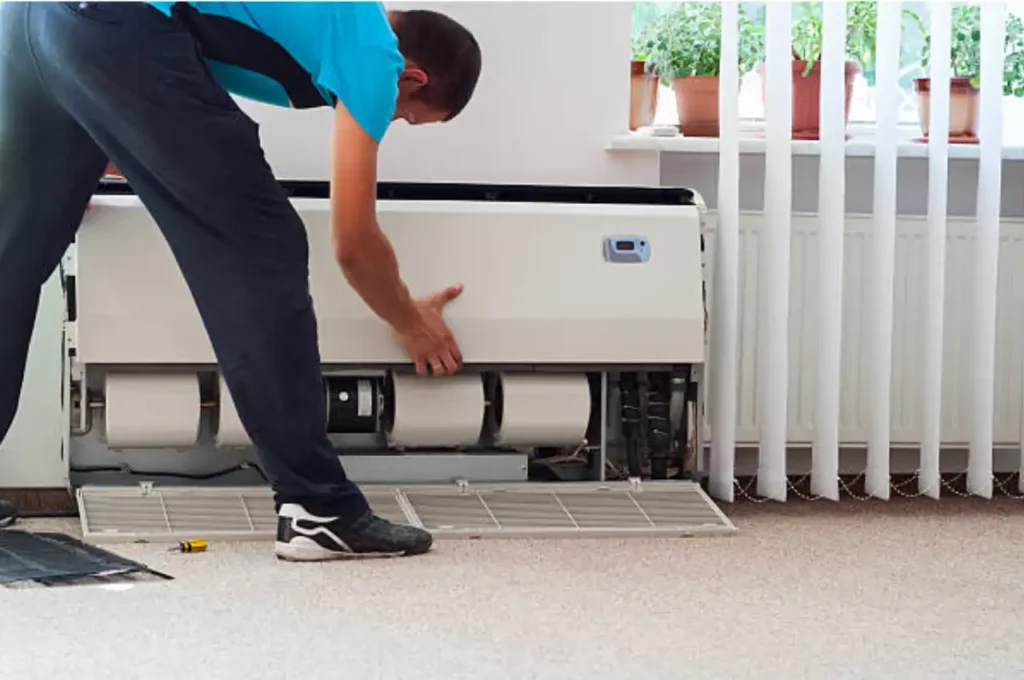
DIY vs Professional – Know Your Limits
There’s so much that you can do in order to have your AC maintained. But some things are strictly for the pros – for your sake and your wallet.
Safe DIY Tasks
1 Changing air filters
2 Cleaning of Cleaning around the outdoor unit
3 Checking etc. Reset breakers
4 Adjusting of thermostat settings
5 Basic troubleshooting
6 Clearing debris from vents
7 Cleaning vent covers
8 Checking and cleaning the drainage line for the condensate
Leave These neighborhoods to the Professionals
1 Anything involving refrigerant – EPA Certification Required Proper handling is illegal and dangerous
2 Electrical repairs – Risk of shock, fire or electrocution to
3 Compressor work – handling High voltage components, refrigerant
4 specialized modifications – Needs to be correctly sized/ sealed
5 Gas furnace repairs – Carbon monoxide threat;
6 Wiring issues- one wrong connection will cause fire
7 Refrigerant recharging – Requires specialized equipment along with knowledge
Attempting to repair anything complicated yourself can:
1 Void your warranty
2 Cause additional damage (turn changing a $200 fix to $2,000 problem)
3 Create safety hazards
4 (violate local building codes)
5 Reduce system efficiency
When in doubt, call a pro. The money that you think you’re saving, could cost you much more in the long-run.
Understanding Your AC System: A Brief Overview
However, knowing how your air conditioner works can help you troubleshoot issues and communicate with technicians.
The Basic Cooling Cycle
Warm air from your house is extracted from your home via return ducts
Air flows over cold coils of evaporator within your home
Refrigerant absorbs heat from the air, cools the air
Cooled air is suffered back down into your home by means of supply ducts
Heated refrigerant flows to the air conditioning outdoors condenser unit
The compressor pressurizes the refrigerant which increases its temperature
Outdoor coils expel the heat by an exterior coil to the heated outdoor air
Refrigerant cools down and goes back inside to repeat the process

Estimated Key Components You should Know
Thermostat: Your system’s brain-controls when it becomes on/off
Evaporator Coils: These are cold, special coils that are located in the interior, removing the heat from your air
Condenser Coils: With ones located outside, these expel the heat to the post-Branches outside air
Compressor: The heart of your system–this is what makes refrigerant cycle and is pressurized
Refrigerant: The chemical which absorbs and does off (R-22 in more of antique systems R-410A in newer ones )
Blower Motor: Forces the air through your ducts
Condensate Drain: Dehydrates the water that is made during the cooling process
Air Filter: Traps organizations, pollen and dust to stop them from getting right into your system
The Bottom Line: Keep Your Cool, and Don’t Get Smart
It is stressful for an AC emergency, but it does not have to be a disaster. By knowing what to look out for first; knowing when to call for help and how to select your technician you’ll be on your way to having your home comfortable again in no time – and seeing if you can avoid getting taken avoiding in a time of vulnerability.
Remember These Key Points:
1 Implement the low cost solutions first – Thermostat, breaker, filter, debris There is a medical rule that states
2 Know when it’s truly an emergency – Safety and health come first”.
3 Eat your vegetables – Don’t let desperation cloud your judgment
4 Invest in regular maintenance – Getting regular maintenance is cheaper than fixing things as an emergency
5 Know the age of your system – Sometimes replacement is more logical than repair
6 Keep records – Knowledge of maintenance history is a key for the technicians to solve problems faster
Your air conditioner goes a long way to ensure you keep cool. Give it a little attention and it is bound to pay it back in kind when you need it most.
Frequently Asked Questions About Emergency AC Repair
Emergency repairs can be as small as $150 for a simple repair such as capacitor replacement or for the great repair such as compressor replacement which can cost $2800+ or more. After-hours service calls on a call will most likely add $100-$250 to the total cost. Always request a computerized written estimated rate for work commenced
If you have an AC which is running and not cooling, turn it off. And running something that doesn’t work Burns how it will cause more damage especially if there’s a refrigerant leak or the coils are frozen. It is preferable to be uncomfortable for a few hours, than to be faced with a $2,000+ compressor replacement bill.
Most common types of repairs take 1-3 hours. However, if parts need to be ordered then you could be waiting 24-48 hours or more. Emergency service calls are often covered by response time of between 1-4 hours depending on demand and location.
If you have a unit that is more than 10-15 years old and it is going to cost over $1,000 to repair, it may be more cost effective to replace it. A new and efficient system can save you 20 – 40% on your living cool costs, and comes with a warranty. $5,000 Rule-To follow this rule you multiply the cost of the repair by the age of your unit. If it’s over $5,000, replace it.
Indoor temperatures above 90 degrees Fahrenheit can be dangerous, especially for vulnerable individuals, such as infants, the persons with health conditions Heat-related illness occurs when the heat index for a particular area goes beyond 91degF. If indoor temps get to 95 degrees F+ then seek a different form of cooling instantly.
The loud noises are usually the symptom of mechanical problems:
1 Screeching= motor bearing failure
2 Banging = loose parts, or parts with broken parts
3 Hissing = refrigerant leak
4 Clicking = inefficient electrical: breakdown of capacitor
5 Buzzing = loose parts Sleep thinkers/ignorers noise/breakdown sacken
Turn your system off and call for service so it can be prevented from causing more harm than it has sucked up.
During monthly cooling season, monthly checks are recommended and replacement every 1-3 months should be performed based on:
1 Filter type (cheap fiberglass= monthly; pleated= 3 month.)
2 Number of occupants and pets
3 Allergy sensitivities
4 Local air quality
A dirty filter is the No 1 cause for AC Problems.
R-22 (Freon) is being phased out because of the environment. If your system uses R-22 in the system, repairs have been becoming more expensive now as availability has become shorter. R-410A is a newer more environmentally friendly refrigerant that is used by systems that were manufactured after the year 2010.
Quite often, these pests have nuts & bolts that are covered with grayish dust, bodily fluids covering them, and need to be cleaned if you want your AC unit to run today!
It depends on your climate. In mild winters, this is usually not the case. In areas with heavy snow and ice, a cover can provide protection to the unit – but ensure that it is breathable so that moisture doesn’t include in the buildup of freeze. Never cover up a heat-pump as it requires airflow throughout the year.
1 Close the blinds and curtains to keep away from sunlight
2 Use fans to circulate air (ceiling fan, box fans, going hand held fans)
3 Take cool showers
4 Keepnected with volumes of water
5 Royce using heat-generating appliances (oven, dryer)
6 Go somewhere cool (library, interior house of friend) if it starts to get dangerous
7 Place bowel of Ice in front of fan for temporary relief
Stay cool out there! If you’re dealing with an AC emergency right now, start with the quick fixes above, and don’t hesitate to call a professional if you’re unsure. Your comfort and safety are worth it. And remember, regular maintenance is the best insurance against future emergencies.
If you have other questions to ask us comment right now on comment box. You can also subscribe for more post like this. thank you.